

Improve Your Kidneys
By Dr Sandra Cabot
This week I have seen 2 women in their 60s with reduced kidney function both of whom did not realize that they had a problem. This is typical as kidney disease is usually silent with no symptoms. In both patients the only identifiable cause was insulin resistance which is prediabetes. In both women the diet was the culprit as they both consumed too much sugar and refined carbohydrates. Carbohydrates get converted into sugar (glucose) which damages the cell membranes and proteins in the kidneys. Thankfully it was not too late to help these patients.
Patients with kidney disease may present with-
- No symptoms at all – thus the importance of regular blood and urine tests to check
- Reduction in the volume of urine produced – less than 400 ml over 24 hours is abnormal
- Fatigue
- High blood pressure
- Headaches
- Pain in the loins if you have stones or infection
- Nausea and poor appetite
- Fluid retention
- Anaemia
The kidneys perform amazing functions –
Your kidneys filter your blood stream removing the waste products of metabolism (namely urea and creatinine and uric acid) from your blood, as well as any drugs you may be taking.
They control the balance of electrolytes (salt and potassium) in your blood.
They make the hormone called erythropoietin which stimulates your bone marrow to produce red blood cells which carry oxygen to your cells; thus, your energy levels reflect your kidney function
They make the enzyme called renin which exerts control over your blood pressure
Tests for kidney function include
Urine tests – analysis of urine for protein, blood, cells, sugar and bacteria
Blood tests for levels of urea and creatinine and estimated glomerular filtration rate (eGFR)

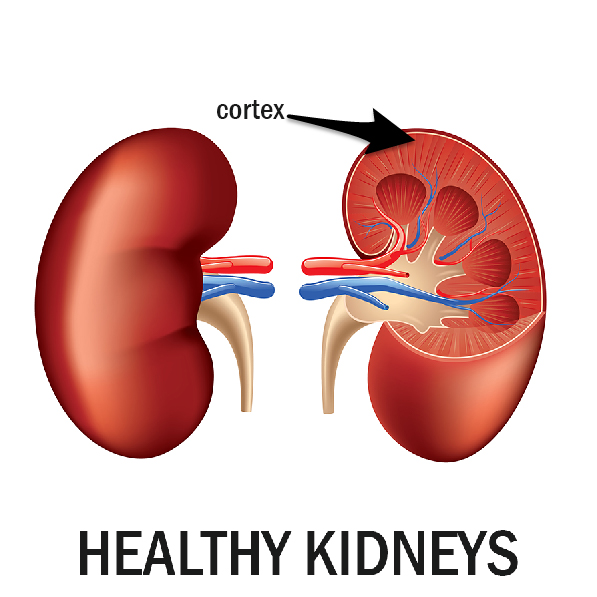
Ultrasound scan of the kidneys and urinary tract – this can show shape and size of kidneys as well as tumours on the kidneys. If the outer layer of the kidneys (known as the renal cortex) is shrinking this is a bad sign of chronic kidney disease. Small kidneys, measuring less than 90mm in length, usually indicate a chronic disease process.
Kidney Health Formula Capsules
These are designed to support optimal kidney function and to reduce the risk of kidney inflammation. Kidney Health Formula capsules can improve kidney function.
Kidney Health Formula Capsules contain – 
- Phyllanthus Amarus which is a plant with thousands of years of traditional use to reduce kidney stones. It exerts anti-septic and anti-inflammatory properties on the kidneys and liver. It is ideal for people who get kidney stones.
- NAC (N-Acetyl- Cysteine) and Selenium which promote the production of the antioxidant glutathione which protects the kidneys
- Parsley to promote excretion of excess fluid from the body
- Cranberry to reduce kidney infections
- Vitamin C to prevent urinary tract infections
Kidney disease is common and contributes to 10% of deaths
TRY MY KIDNEY QUESTIONNAIRE
- Do you sometimes retain a lot of fluid, more so than you used to?
- Is the volume of urine that you pass each day less now than it used to be?
- Have you had an unexplained rise in blood pressure?
- Have you started getting unexplained headaches?
- Have your nails flattened or become spoon shaped?
- Have you experienced unexplained nausea or vomiting?
- Do you have a family history of kidney disease?
- Do you have a history of frequent urinary tract infections?
- Do you have diabetes or a pre-diabetic state?
- Has your urine changed color or odor?
- Do you suffer with pain in the loins?
- Have you had kidney stones?
To keep your kidneys healthy –
- See your doctor every year for blood and urine kidney tests
- Drink plenty of clean water
- Control high blood pressure
- Take Kidney Health Formula Capsules if your kidneys are sluggish
- Drink raw juices made from celery, cucumber, parsley, mint, ginger, green apple, lemon, orange and carrot – see my book Raw Juices can Save Your Life
- Avoid excess sugar and carbohydrates in the diet
- Keep your weight in the healthy range
- Exercise regularly
Kidney disease is usually silent and insidious and if you don’t detect it your fate may be dialysis or kidney transplant. Dialysis is typically carried out 3 days a week, with each session lasting 4 hours. Dialysis can also be done at home 4 times a week in 4-hour sessions.
Most kidney disease is preventable and if detected early the kidney function can usually be improved back to normal.
Insulin resistance in chronic kidney disease: a systematic review
Know someone who might benefit from this article? Share it!


Search
Shop Our Products by
Health Interest
-

Hormone & Thyroid Health
-

Liver & Gallbladder Health
-

Digestive Health
-
Bone & Joint Health
-

Women's Health
-

Immune Health
-

Healthy Aging
-

General Health
Most Recent Articles
Need Help?
1-888-75-LIVER
Monday to Friday, 9:00 am to 5:00 pm MST
100%
Satisfaction Guaranteed
If it’s faulty or wrongly described, we’ll replace it.