
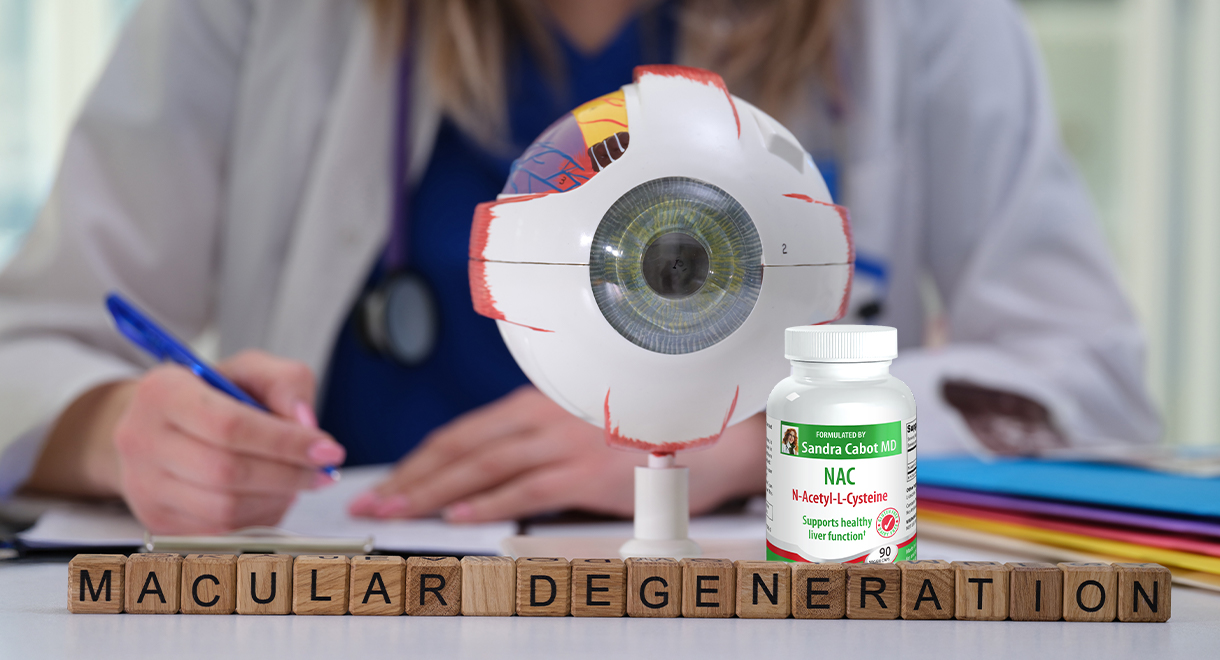
N-acetyl Cysteine Helps Protect Against Macular Degeneration
N-acetyl cysteine (NAC) is a peptide your body uses for glutathione production. It has anti inflammatory and detoxifying properties. Recent research has shown that NAC protects retinal pigment epithelial cells from damage, helping to prevent age-related macular degeneration.
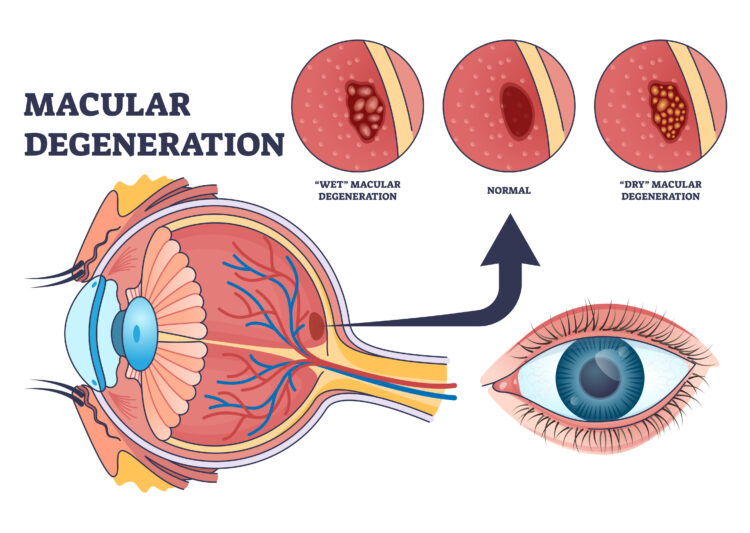
Age Related Macular Degeneration is the slow deterioration of the cells in the macular, a tiny yellowish area near the center of the retina. It is responsible for clear vision reading, recognizing faces and the discernment of colors. With aging, the macular becomes thin and gradually destroys sharp, central vision. MD is one of the leading causes of blindness for those over 55 years of age in the United States, with women twice as likely to develop MD as men. One of the major causes of MD is thought to be exposure to free radicals caused by smoking, air pollutants, radiation, environmental toxins, drugs and a family history.
Your body uses NAC for glutathione production. Glutathione is your body’s own powerful antioxidant. It’s produced in your liver and is more potent than kale or blueberries. Illness, some medications and aging all reduce the ability of your liver to produce glutathione, leaving you susceptible to deteriorating health, inflammation and faster aging.
A study published in the journal Oxidative Medicine and Cellular Longevity found that NAC reduced reactive oxygen species (free radicals) production and protected from retinal cell death and ATP (energy) depletion. NAC also improved mitochondrial function in the eyes.
There are 2 forms of age related macular degeneration, wet and dry. Approximately 10 percent of affected individuals have the wet form. The treatment of the wet form has significantly advanced in recent years. Unfortunately the dry form of macular degeneration is far more common and there aren’t really any effective enough treatments. It can cause blindness in a high percentage of sufferers.
Many people are not producing enough glutathione in their body, or they use up their stores too quickly due to chronic health problems caused by inflammation.
Strategies for raising glutathione and protecting your vision
Get enough selenium in your diet. Selenium is a powerful antioxidant and is needed for your body to produce glutathione. Selenium is depleted from the soils in many parts of the world, therefore few foods are a reliable source. Reasonable sources of selenium include Brazil nuts, sardines, grass-fed beef and chicken. Selenium and n-acetyl cysteine (NAC) are an optimal combination for boosting glutathione production. NAC is the precursor of glutathione.
Look after your liver. That’s where you make glutathione, so you want your liver to be as healthy as possible. When was the last time you had a blood test checking your liver health? Many people have a fatty liver, inflamed liver or poorly functioning liver and don’t know it. If you feel tired, bloated, can’t lose weight or your hormones are unbalanced, you likely have an under-functioning liver. Livatone Plus contains the nutrients your liver needs to carry out its metabolic functions and detoxification.
Try to get enough sleep. Maintaining good sleep hygiene is essential for good health, weight maintenance and healthy aging, and is also good for increasing glutathione levels. Research has shown that glutathione content was decreased in the liver by 23-36% following 5 and 10 days of sleep deprivation. Magnesium is a relaxing mineral which relieves sleeplessness and restless sleep.
Add sulfur-rich foods to your diet. It is essential to consume foods with adequate sulfur content as sulfur binds to toxins and free radicals, allowing them to be safely eliminated from the body. Studies have shown that eating sulfur-rich foods can increase glutathione and reduce oxidative stress. Suitable foods include garlic, onions, eggs and cruciferous vegetables such as broccoli, cauliflower, cabbage, kale, Brussels sprouts and bok choy. Sulphur is required for phase 2 detoxification pathways in the liver, which are often too slow compared to phase 1. Sulfur, in the form of MSM is in Collagen Food powder, which is also an excellent source of vitamin C.
Make sure you get plenty of methylation nutrients in your diet. Methylation is a process that assists your body’s production of glutathione. The main nutrients required for methylation are B vitamins, particularly B6, B9 (folate) and B12. B12 is found in animal foods such as meat, poultry and seafood, while plant foods are an excellent source of the other B vitamins. It is important to eat lots of vegetables each day, either as salads, vegetable juices, smoothies, or cooked vegetables.
The above statements have not been evaluated by the FDA and are not intended to diagnose, treat or cure any disease.
Know someone who might benefit from this article? Share it!


Search
Shop Our Products by
Health Interest
-

Hormone & Thyroid Health
-

Liver & Gallbladder Health
-

Digestive Health
-

Bone & Joint Health
-

Women's Health
-

Immune Health
-

Healthy Aging
-

General Health
Most Recent Articles
Need Help?
1-888-75-LIVER
Monday to Friday, 9:00 am to 5:00 pm MST
100%
Satisfaction Guaranteed
If it’s faulty or wrongly described, we’ll replace it.