

Tinnitus Could Be A Dementia Warning
The incidence of dementia continues to rise in most parts of the world. Cognitive impairment takes many years to develop and the end stage consequences can be devastating for the individual and their family. New research has shown that tinnitus can be an early warning sign of dementia.
According to a study published in the journal Frontiers in Neurology, people with tinnitus have significantly lower scores on cognitive function tests. This finding comes from 684 participants who had undergone a tinnitus survey as well as cognitive function test. 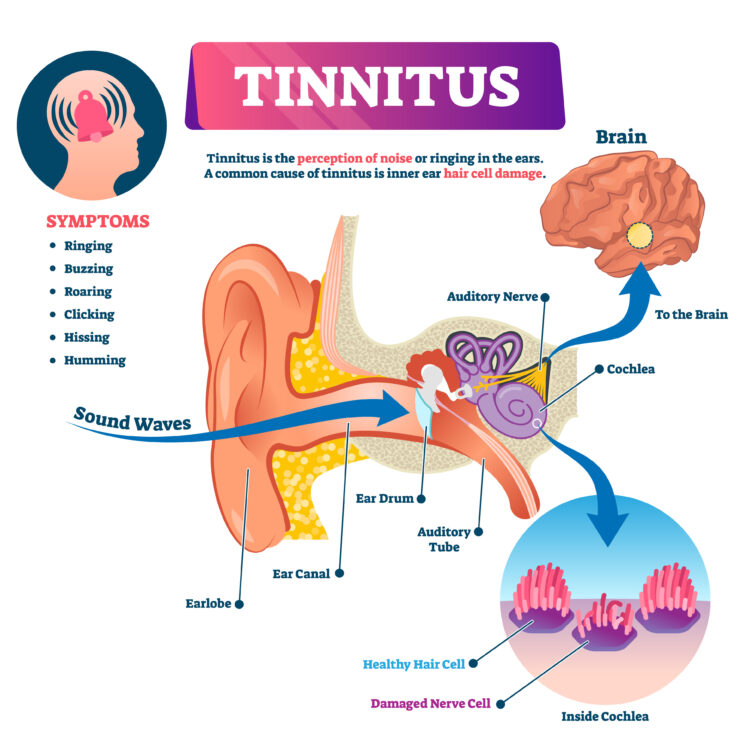
According to the researchers, "There was a significant correlation between tinnitus and impaired cognitive function, consistent with previous research, indicating an association between tinnitus and cognitive impairments.”
Tinnitus is a condition that causes sound to be heard in one or both ears, or in the head, when no external sound is present. It's commonly described as ringing, buzzing, hissing, or pulsing. Tinnitus can be temporary or long term. It can be experienced in one or both ears, or in the head. The intensity of tinnitus can range from barely noticeable to extremely loud and distressing, interfering with sleep and day to day function.
A number of factors can lead to an individual suffering from tinnitus. In some individuals, it may mean their brain health is suffering.
What you can do to protect your brain
Keep your carbohydrate intake low.
I have written about the dangers of consuming too much carbohydrate and sugar for many years. These foods can shorten your lifespan and greatly reduce your quality of life. You can read more about insulin resistance and see my easy to follow eating plan in my book I Can't Lose Weight!...And I Don't Know Why. Whether you are overweight or not, avoiding high blood sugar and high insulin is critical for a healthy brain.
Make sure you include plenty of good fats in your diet.
Your brain is made up of approximately 70 percent fat, therefore you must consume plenty of healthy, natural fats in your diet in order to nourish your brain cells. Fish is the most well known brain food and for good reason. The omega 3 fats in fish oil form the structure of cell membranes and therefore are required for proper nerve cell communication. They also have an anti-inflammatory effect in the brain. A study published in the July 2003 issue of the "Archives of Neurology" studied more than 800 participants regarding the effect of fish and omega-3 fatty acids on risk of Alzheimer's disease. Individuals in the study who consumed fish at least once a week had a 60 percent lower risk of developing Alzheimer's disease than people who did not eat fish once a week. Not everyone enjoys eating fish, and it can be very difficult to obtain wild fish, relatively free of heavy metals and other contaminants. Krill oil is an excellent source of the omega 3 fats EPA and DHA in a concentrated and purified form. Taking a krill oil or fish oil supplement regularly can greatly help to protect your brain.
Eat more vegetables.
People who eat a lot of vegetables are at lower risk of every disease, including Alzheimer’s. Try to consume vegetables with at least two of your meals each day. It is best to eat some vegetables raw and some cooked. Try to eat a wide variety of vegetables; many people stick to a small handful of varieties and never try eating different vegetables they are unfamiliar with. If you want to make your own raw vegetable juices as well, that will provide even greater antioxidant benefits. See my book Raw Juices Can Save your Life for inspiration.
Include more spices in your meals.
You have probably heard about the great benefits of turmeric to the brain. It is the intense yellow spice that gives curry its color. Turmeric has a strong affinity for the brain and a great deal of research has linked its consumption with protection from dementia. Other herbs and spices have brain benefits also. Try to include a variety in your diet regularly. Examples include cumin, coriander, dill, basil, galangal, ginger and garlic.
There are many more strategies for improving brain health in my book Alzheimer’s: What you must know to protect your brain.
The above statements have not been evaluated by the FDA and are not intended to diagnose, treat or cure any disease.
Know someone who might benefit from this article? Share it!


Search
Shop Our Products by
Health Interest
-

Hormone & Thyroid Health
-

Liver & Gallbladder Health
-

Digestive Health
-

Bone & Joint Health
-

Women's Health
-

Immune Health
-

Healthy Aging
-

General Health
Most Recent Articles
Need Help?
1-888-75-LIVER
Monday to Friday, 9:00 am to 5:00 pm MST
100%
Satisfaction Guaranteed
If it’s faulty or wrongly described, we’ll replace it.